Why we're called Kairn
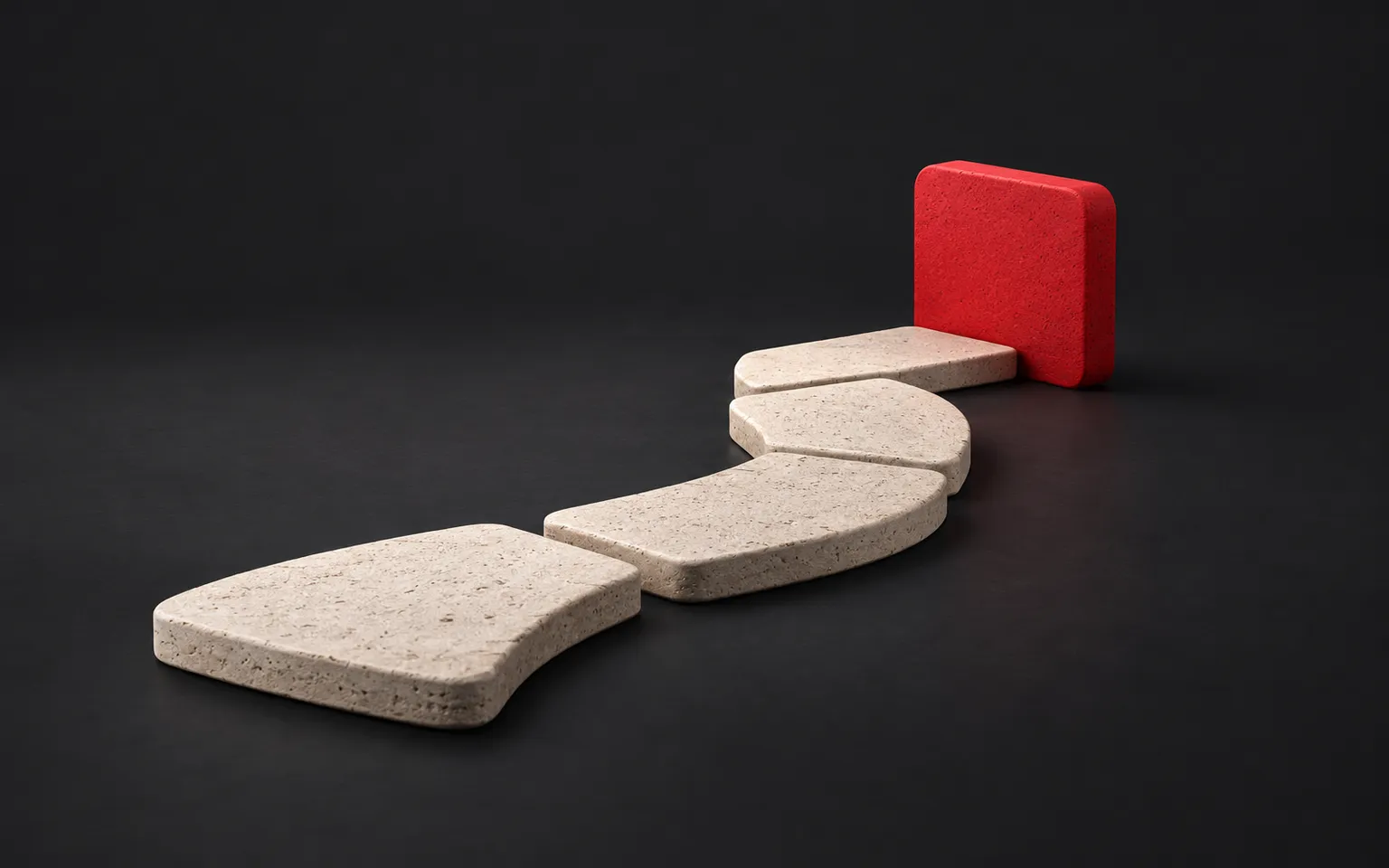
A cairn is a small stack of stones that tells the next hiker they are on the right path. That idea shapes how we write, build and document, and why we use exactly one red.

On a mountain trail, at the point where the path fades into rock, you will sometimes find a small stack of stones. Someone put it there. Someone else added a stone later. It is called a cairn, and it says one thing: others have been here, and this way works.
We named our company after it, with a different spelling and the same idea.
A good marker is small, easy to see, and left by someone who was thinking of the next person.
What a cairn does
A cairn is modest. It is not a signpost with a map or a manual. It is a few stones, placed so that the next traveller, tired and unsure in poor light, can take one more confident step.
Three properties make it work:
- It is visible from a distance. You do not have to be standing next to it to notice it.
- It is cheap to add to. Anyone can place one more stone. That is how the trail stays marked.
- It is for someone else. The person who builds it already knows the way. They build it for the person who does not.
Software projects lack all three by default. Code that made sense to its author is a fog to the next reader. Decisions evaporate. The person who understood the system leaves, and the trail goes with them.
How it shapes the way we work
We are an AI-first software studio, and we build agents, web apps, mobile apps and data pipelines for clients ranging from Indian small businesses to global startups. The work varies a lot. The habit underneath does not: leave markers.
We write things down. A decision made in a call and not recorded has not been made, because nobody can find it. We keep short written notes on what we chose, what we rejected and why. They do not need polish. They need to exist.
We leave the codebase better marked than we found it. When we touch a confusing function, we name things clearly, add the missing comment that explains the why, and fix the stale readme. Not as a separate project, but as part of the change. A pull request that adds a feature and removes a small mystery is a good one.
We treat documentation as a cairn. A readme that tells you how to run the project, an architecture note that explains the shape of the system, a runbook for the thing that breaks at night: these are stones on the path. They are most valuable at the moment someone is lost, so we write them for that moment.
We hand over, not hand off. When a project ends, the client should be able to continue without us. That means clean repositories, deployment notes, a list of known sharp edges and a way to ask questions. Working ourselves out of a job is a fair measure of a good engagement.
We leave honest trail markers in the work. Where something is a shortcut, we say so. Where a test is missing, we note it. A marker that lies is worse than none, because it sends the next person confidently in the wrong direction.
Small markers, not monuments
There is a trap here. Documentation can grow into a library that no one reads, and process can swell until the process is the work. A cairn is deliberately small.
So we favour short over exhaustive. One page that is read beats ten that are not. We would rather have a clear readme and a living example than a binder. We keep notes close to the thing they describe, in the repository next to the code, because stones placed far from the trail do not help.
Maintenance matters too. A cairn that has collapsed is misleading. When something changes, the marker changes with it, or it gets removed.
Why one red
Our brand colour is Trail Red, and we use it sparingly on an otherwise black-and-white palette. The reason is the trail.
Hikers know the painted blaze on a tree or a rock: a single patch of colour that stands out against the landscape of grey, green and brown. It works because there is only one of it. If every tree were marked, none would mean anything.
We apply the same discipline to our own sites and products. Red marks the thing you should notice: the next action, the current location, the way forward. Everything else stays quiet. When we are tempted to add a second use for it, we ask whether it is still a marker.
Constraint is part of the design. Limiting ourselves to one accent forces clarity about what matters on each screen, and the same instinct carries into how we scope projects and write interfaces. If we cannot say what the one important thing is, we have not finished thinking.
An invitation to add a stone
This blog, Kairn Journal, is another cairn. We will write about how we build: engineering notes, product decisions, how we approach AI, and what we learn along the way. We will keep it specific, say what we know and say where we are unsure.
If something here helps you take a step with more confidence, it has done its job. And if you find a better path, leave a marker for the next person. That is how trails get made.